 Jane Doe, M.A.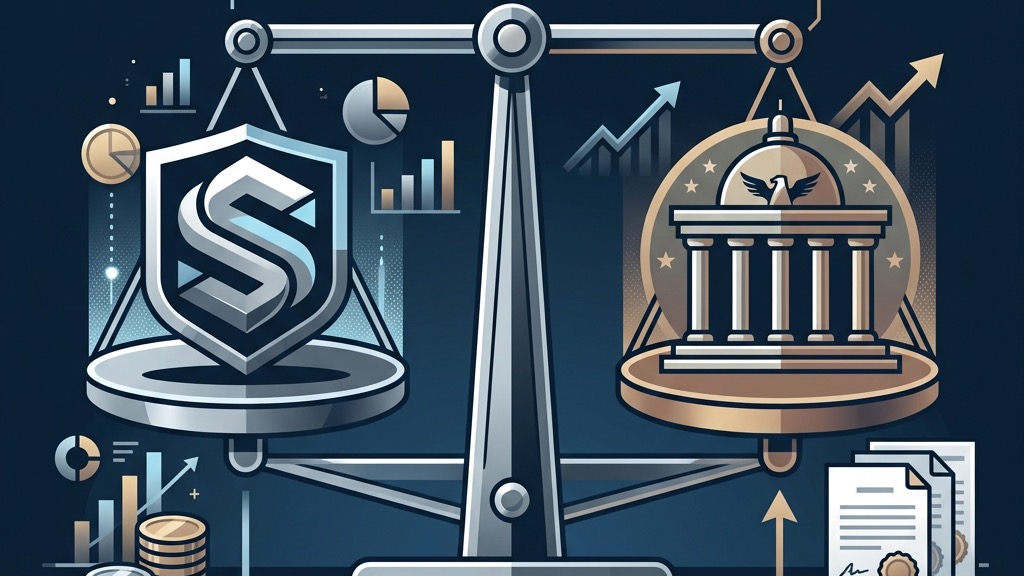
SoFi Student Loan Refinance Rates vs. Federal IBR: When to Switch & When to Stay (2026)
You check your mail and see another glossy mailer from SoFi. Usually, you toss them. But this time, you pause. The bold print claims you could lock in a 5.5% fixed interest rate if you refinance your student loans today.
You log into your federal loan servicer account. You are staring down 7.5% or maybe even 8% on your graduate loans. The math seems obvious: cut the interest rate, save thousands, and pay the monster off faster.
But hold on. If you are currently sitting on a federal Income-Based Repayment (IBR) plan, comparing interest rates is only half the battle. In fact, jumping at the best student loan refinance rates SoFi has to offer without looking at the fine print could end up being the worst financial mistake of your life.
Here is the brutal truth about when you should pull the trigger on a private refinance, and when you absolutely need to stay put.
The Trap of the Tempting Rate
Let's look at why private refinancing looks so good on paper right now.
If you owe $80,000 in federal loans at a blended 7.5% interest rate, your standard 10-year monthly payment is roughly $949. Over that decade, you will bleed out over $33,000 in interest alone.
If you take that exact same balance and qualify for an aggressively low rate from a private lender—say, 5.5% over 10 years—your payment drops to $868. Your total interest paid over the life of the loan drops to around $24,000.
You just saved nine thousand dollars. It feels like a massive win. You sign the paperwork, your federal loans are officially paid off by the private lender, and you instantly get a much better rate.
But what exactly did you just trade away to get it?
SoFi (Private) vs. Federal IBR at a Glance
| Feature | SoFi (Private Refinance) | Federal IBR (Income-Based) |
|---|---|---|
| Interest Rate (Example) | 5.5% Fixed | 7.5% - 8% |
| Monthly Payment Basis | Fixed amortized amount (e.g., $868) | Percentage of discretionary income (e.g., $187) |
| Job Loss Protection | Minimal (payment remains the same) | Payment drops dynamically, as low as $0 |
| Loan Forgiveness | None | Remaining balance forgiven after 20-25 years |
| PSLF Eligibility | Permanently lost | Fully eligible for public servants |
When Switching is Financial Suicide
Here is where the math gets dangerous. If you refinance a federal loan into a private loan, you permanently strip away every single federal protection you have. You can never get them back.
Let’s say you currently make $45,000 a year, but you carry that same $80,000 in debt. Under a federal IBR plan, your monthly payment isn't $949. Based on your discretionary income, your payment is probably around $187 a month.
Even crazier? If you lose your job, or your income drops low enough, your required IBR payment drops to $0.00. And yes, those $0 payments still fully count toward your 20- or 25-year total loan forgiveness clock.
If you refinance with a private lender, there is no income-based repayment. There is no forgiveness after 20 years.
If you lose your job next year, the lender still expects their $868 on the first of the month. If you want to pursue Public Service Loan Forgiveness (PSLF) as a teacher or a nurse, you are out of luck—private loans do not qualify for PSLF under any circumstances.
SoFi's 5.5% rate looks extremely tempting, but if your current IBR monthly payment is $0 and you are actively accumulating credit toward the 20-year forgiveness finish line, switching is financial suicide.
Who Actually Benefits From Refinancing?
I don't recommend refinancing for most federal borrowers in 2026, simply because the federal safety net is too valuable to lose in an unpredictable economy. However, there is a very specific profile of borrower who absolutely should look into the student loan refinance rates SoFi and other competitors are offering.
You are a prime candidate for a private refinance if:
- You are a high earner with a secure job: If you are making $150,000+ a year, your calculated IBR payment might actually be higher than the standard 10-year repayment amount. At that point, you aren't benefiting from IBR caps anyway.
- You have no plans for public service: You work in the private sector and will never pursue or qualify for PSLF.
- Your financial emergency fund is fully stocked: If you lose your job, you can comfortably make the larger private loan payments for six months while you find new work.
- You have private loans already: If you are holding private loans from Sallie Mae or Discover at 11%, you should absolutely be shopping those around for a better rate right now. You never had federal protections on those balances to begin with, so there is no downside to refinancing them.
The Ultimate Checklist Before You Switch
Do not let a direct mail flyer dictate your financial strategy. If you are tempted to pull the trigger and refinance your federal debt, ask yourself these three critical questions:
- Will I need PSLF in the next 10 years?
- Would my monthly budget collapse if I owed a standard 10-year payment instead of my income-capped IBR payment?
- Am I already close to the 20-year IBR forgiveness threshold?
If you answered yes to any of those questions, stay exactly where you are. Keep your federal loans safe inside the government system.
Before making any permanent moves, pull up our free IBR Calculator. Run your current income against your family size. See exactly what the Department of Education is demanding from you today. Compare that hard number against the monthly premium private lenders are offering. Only then can you make a decision based on actual math, instead of clever marketing.
Disclaimer: This article is for educational purposes only and does not constitute financial or legal advice. Student loan rules change frequently — always verify current information at StudentAid.gov.