 Jane Doe, M.A.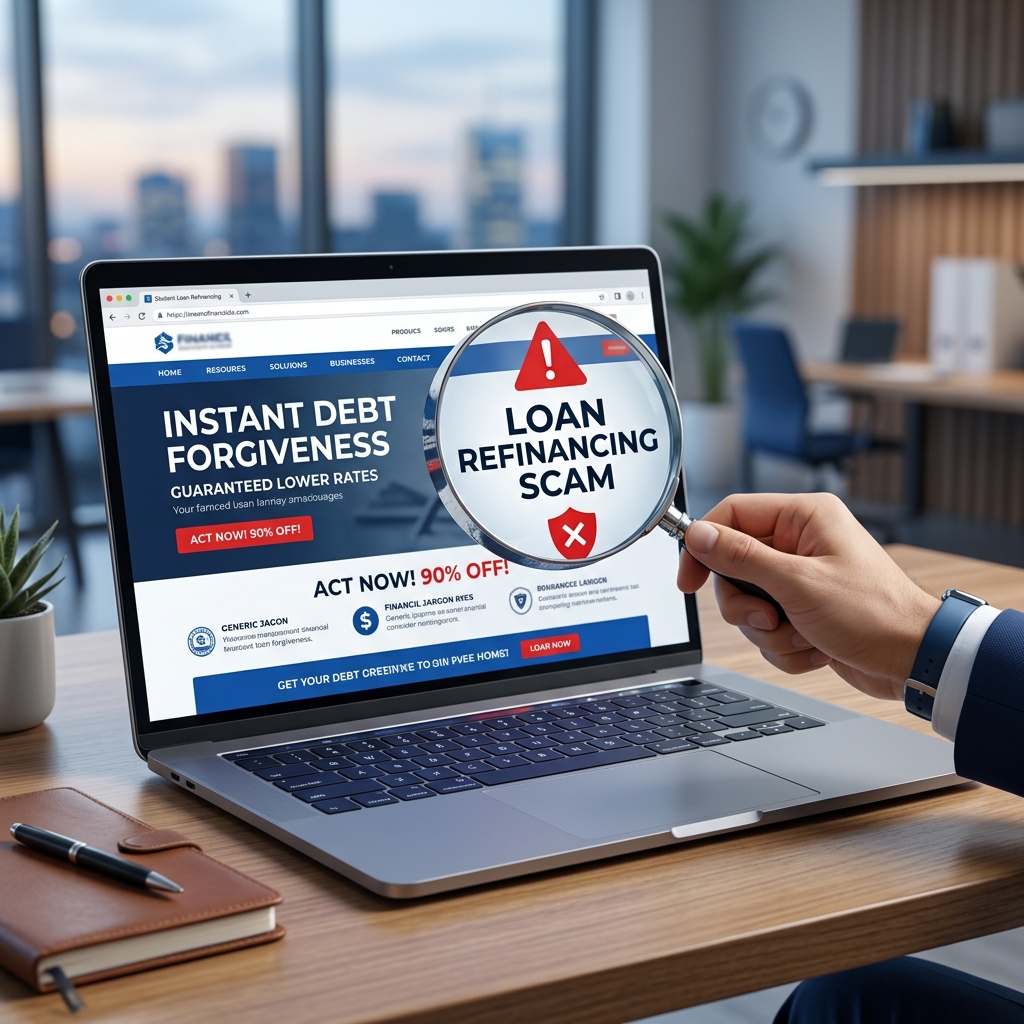
Student loan borrowers are currently being hunted.
With the 2026 repayment landscape shifting under new court rulings and frozen federal plans, confusion is at an all-time high. Scammers thrive in confusion. They don’t just want your money; they want your Social Security number, your FSA ID, and total control over your financial life.
If you are looking to refinance or consolidate your loans, you need a "sniff test." Use this Refinancing Scam Checker to audit any company that contacts you promising "secret" forgiveness or lower rates.
1. The "Immediate Forgiveness" Lie
The Scam: You receive a call or see an ad promising "Total Student Loan Discharge" or "Immediate Forgiveness under the new 2026 Emergency Act." The Reality: There is no such thing as "secret" or "immediate" forgiveness that isn't listed on StudentAid.gov. Federal forgiveness programs (like PSLF or IBR) take 10 to 25 years of documented payments. Scam Checker Tip: If a company claims they can bypass federal requirements to get you forgiven in months, they are lying. Period.
2. Upfront "Processing" Fees
The Scam: A company asks for a "consolidation fee" or a "monthly maintenance fee" of $50–$200 to manage your IBR plan. The Reality: It is 100% free to apply for IBR, SAVE, or consolidation through the Department of Education. Legitimate private refinancing companies (like SoFi or Earnest) make their money from interest—not from charging you to fill out a form. Scam Checker Tip: If you have to pay to get "access" to a program, close the tab and walk away.
3. High-Pressure "Deadline" Tactics
The Scam: "Your eligibility for the 2026 Debt Relief Program expires in 4 hours! Call now to secure your spot!" The Reality: Government programs don't work like limited-time flash sales. Federal repayment plans are based on law, not "available spots." Scam Checker Tip: Legitimate financial institutions want you to read the fine print. Scammers want you to act while you’re panicked.
The Refinancing Scam Checker Checklist
Before you give any website your information, check for these five technical red flags:
- The URL Check: Is the domain brand new? (Use a 'Whois' lookup). Most scams use domains registered in the last 30–60 days.
- The FSA ID Trap: Do they ask for your StudentAid.gov password? Never give this out. A legitimate lender will never need your login credentials to process a refinance.
- The "Department of Education" Badge: Many scammers use fake seals or names like "National Student Loan Center" to look official. Check for a
.govaddress. - The Physical Address: Look at their "Contact Us" page. If they only have a P.O. Box or no physical office location listed, they aren't a bank.
- Grammar & Urgency: Professional lenders have legal teams that vet every word. Scams often have typos or inconsistent branding.
What to Do If You've and Been Targeted
If you suspect you’ve engaged with a fake loan website:
- Change your FSA ID password immediately.
- Contact your bank to stop any pending payments.
- File a report with the Federal Trade Commission (FTC) at ReportFraud.ftc.gov.
- Freeze your credit if you provided your Social Security number.
The Bottom Line
Refinancing can be a smart move to lower your interest rates, but it must be done through reputable, vetted lenders. If you’re unsure, stick to the federal system or use our IBR Calculator to see what your legal federal options are first.
Don't let a "debt relief" promise turn into a multi-year identity theft nightmare.
Disclaimer: This article is for educational purposes only and does not constitute financial or legal advice. Student loan rules change frequently — always verify current information at StudentAid.gov.